
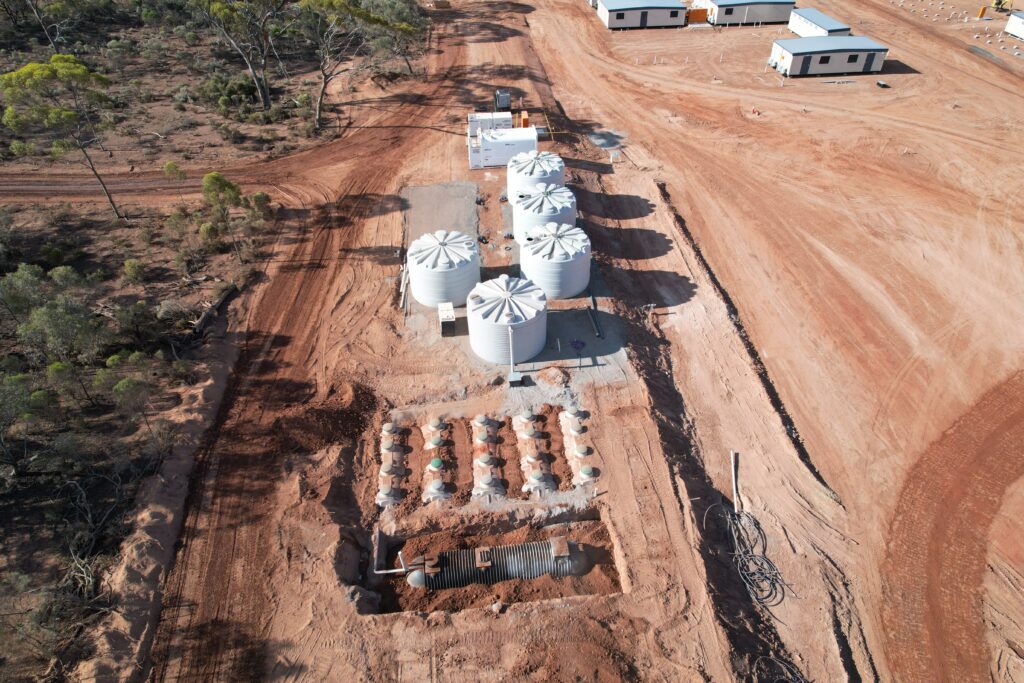
Remote mine sites across Kalgoorlie, the Goldfields and regional Western Australia need dependable onsite wastewater systems for accommodation camps, amenities and operational facilities. Without access to reticulated sewer networks, treatment capacity, ground conditions and long-term servicing all need to be considered before work starts.
Wastewater treatment plant installation involves more than placing tanks and connecting pipes. This guide explains how septic systems and treatment plants differ, what affects installation on remote sites, which approvals matter in WA and how scheduled maintenance keeps systems operating.
Why Remote Mine Sites Need Reliable Onsite Wastewater Systems
Operating Beyond Reticulated Sewer Networks
At remote operations, wastewater from buildings must be collected, treated and managed onsite. Treatment equipment and effluent management areas need to fit within the site layout, with access retained for inspections and servicing.
These decisions are best made while camp buildings, road access and underground services are being planned. Leaving wastewater works until late in a project can create clashes with other utilities or limit suitable installation areas.
Wastewater Loads From Camps, Amenities and Operational Facilities
Showers, toilets, kitchens and laundries generate wastewater every day. Camp occupancy, shift patterns and the number of people using shared amenities influence the volume reaching the treatment system.
Wastewater calculations also help determine the sizing and layout of connecting pipes, tanks and pumps. Emyjor’s mining industry services include plumbing works for workforce accommodation and site amenities across the Goldfields.
The Operational and Environmental Risks of System Failure
Blockages, equipment faults and overflows can interrupt toilets, showers and other essential facilities. Escaping wastewater creates hygiene concerns and risks to nearby soil and water.
Faults are particularly disruptive when a site is hours from replacement parts or specialist support. Sound installation, routine inspections and clear fault reporting give operators a better chance of identifying problems early.
Understanding Wastewater Treatment Plants and Septic Systems
How Onsite Wastewater Treatment Works
Wastewater travels from buildings through drains and pipework into an onsite treatment system. The selected design determines how solids are separated, how organic matter is treated and where effluent goes afterwards.
Tanks, pumps, controls and effluent management areas form part of the wider system, but the equipment used varies between sites.
Wastewater Treatment Plants and Their Role in Wastewater Management
A wastewater treatment plant can incorporate several treatment stages, such as settling, biological treatment and filtration. Pumps move wastewater between components, blowers supply air where required, and monitoring controls help operators check system operation.
Some wastewater treatment plants use aeration to introduce air into the system and support biological treatment. These systems require regular servicing of components such as blowers, pumps and alarms to maintain reliable operation. Treated effluent must also be managed through an approved system.
Conventional Septic Tanks and Effluent Disposal Systems
A septic tank provides primary treatment by allowing solids to settle and some organic matter to break down. Effluent then passes to an approved downstream management system.
For mine sites, the choice between a conventional septic system and a treatment plant depends on more than the number of tanks.
| System | Main Function | Planning Consideration |
| Conventional septic tank | Separates solids and provides primary treatment | Suitable effluent management and ground conditions |
| Wastewater treatment plant | Can provide additional treatment stages | Treatment capacity, equipment and ongoing servicing |
Choosing the Right System for Site Conditions and Wastewater Loads
The selection process needs to account for:
- Daily and peak demand: Workforce size, accommodation capacity and high-use periods.
- Ground and space: Soil conditions, tank locations and approved effluent management areas.
- Treatment needs: The required standard and proposed system design.
- Long-term access: Room for inspections, equipment repairs and scheduled servicing.
Emyjor Services is happy to provide phone consultations to discuss the wastewater treatment plant options suited to your site’s needs. The team can talk through expected wastewater volumes, site conditions and installation requirements before progressing with the project.
Emyjor also supports wastewater treatment plant and septic system installation in WA, including assessment, system design and approval coordination, installation and commissioning.
Site Conditions That Influence Wastewater Infrastructure
Soil Type, Ground Conditions and Available Disposal Areas
Soil permeability, rocky ground and available land influence the location of tanks, trenches and effluent management areas. An early site assessment identifies what can be excavated and where the system can be installed without conflicting with other site works.
Camp Occupancy, Roster Cycles and Peak Wastewater Demand
Roster changeovers and shutdowns can increase wastewater demand over short periods. Sizing calculations need to consider those peaks alongside daily volumes, with allowance for planned camp expansion where applicable.
Heat, Dust and Harsh Goldfields Conditions
Goldfields heat and dust affect where exposed pumps, blowers and electrical controls are placed. Protective enclosures, equipment access and manufacturer operating conditions deserve attention before the system is installed.
Technicians also need safe access to inspect and maintain equipment while the camp remains in use.
Remote Access, Equipment Mobilisation and Maintenance Logistics
Getting tanks, machinery and plumbing materials to a remote mine site requires a coordinated delivery schedule. Travel times, site inductions and designated access windows influence when excavation and plumbing crews can begin each stage of installation.
Emyjor’s excavation services in Kalgoorlie cover service locating, trenching, rock breaking, soil removal, backfilling and compaction. Coordinating these works with plumbing crews helps keep tank placement and pipe connections aligned with the construction schedule.
Compliance Requirements for Mine Site Wastewater Systems
WA Health Approval Requirements
Under WA’s onsite wastewater approval process, applications are first lodged with the local government. For non-single-dwelling premises receiving more than 540 litres of sewage per day, the local government assesses the application and forwards it to the Department of Health for final approval.
The proposed treatment product must be approved for use in WA. Emyjor assists with wastewater and plumbing approvals, including plans, supporting documents and liaison with relevant authorities.
Environmental and Site Compliance Considerations
Wastewater systems must account for risks to surrounding land and groundwater. Some mine site facilities also fall under the Department of Water and Environmental Regulation’s prescribed-premises requirements.
WA’s prescribed-premises categories include:
- Category 54: Qualifying sewage facilities with a production or design capacity of 100 cubic metres or more per day.
- Category 85: Qualifying sewage facilities with a capacity of more than 20 but less than 100 cubic metres per day.
These categories cover specified sewage treatment and discharge activities. Whether the requirements apply depends on the facility’s classification, capacity and operations, so the approval pathway should be confirmed during planning.
Installation Records, Commissioning and Documentation
Clear records show how the installation matches approved drawings and operating conditions. Handover information typically includes:
- Approved drawings and installation records.
- Inspection and commissioning results.
- Operating instructions and servicing requirements.
Under WA’s onsite wastewater approval process, local government must inspect the completed installation and issue a permit to use before the system operates.
Installing Wastewater Treatment Systems on Remote Sites
Site Assessment, Set-Out and Service Locating
Before excavation, crews confirm the design, mark tank and trench locations and identify existing underground utilities. This is particularly important around active camps, where electrical cables and water services may cross the work area.
Where services need to be exposed, non-destructive digging can reduce the risk of damage compared with uncontrolled mechanical excavation.
Excavation, Tank Placement and Pipe Installation
Excavation creates the tank foundations and pipe trenches, with rock breaking or soil removal undertaken where site conditions require. Tanks are positioned to the approved design, then connected to pipework, pumps and associated equipment.
Backfilling, compaction and reinstatement follow the installation specifications. Coordinating this work with other trades helps prevent buried service conflicts and unnecessary rework.
Testing, Commissioning and Site Handover
Commissioning verifies pipe connections, pumps, controls, alarms and treatment operation against the design and manufacturer’s instructions. Faults identified during testing need to be addressed before the system is handed over.
The site team should receive operating guidance, relevant test records and a clear servicing schedule, so responsibilities are understood from the outset.
Maintaining Wastewater Systems for Long-Term Performance
Planned System Inspections and Preventative Maintenance
Mine camp wastewater systems work every day, and equipment needs ongoing attention. Inspection frequency follows the manufacturer requirements, the approved service conditions and how the plant is used.
Routine maintenance helps detect blocked components, worn parts and changes in equipment performance before they interrupt amenities. It also gives camp managers a reliable record of servicing.
Identifying Early Warning Signs of System Failure
Operators should report changes as soon as they appear. Warning signs include:
- Slow drainage or recurring blockages.
- Unusual odours or wastewater pooling.
- Pump or blower alarms, faults and abnormal operation.
Recording what happened, when it started and which equipment was affected gives the servicing team useful information before attending site.
Building Wastewater Maintenance Into Site Operations
Emyjor manages recurring scheduled servicing for wastewater treatment plants, including quarterly visits where the manufacturer’s instructions or approval conditions require them. The team organises the servicing schedule with the client, coordinates site access and follows up upcoming appointments. This means camp managers and site teams don’t have to organise each service visit themselves.
During a scheduled visit, Emyjor’s servicing scope can include:
- Inspecting the system: Tanks, lids, pipes and fittings are checked for damage, leaks and other issues.
- Testing equipment: Pumps, blowers, diffusers, irrigation components and controls are checked, including float switches and alarms.
- Completing routine servicing: Blower filters and related parts are cleaned or serviced, and chlorine tablets and standard consumables replaced where the system specifies them.
- Recording results: The technician completes the manufacturer’s service checklist with photographs and test results.
- Reporting follow-up work: Identified faults or repair needs are communicated promptly rather than left until the next visit.
After each appointment, Emyjor emails the completed service checklist to the client. This provides a record of work completed and any issues requiring attention, while the team continues to coordinate the servicing calendar.
Its facility and mine site maintenance services also cover plumbing inspections, preventative maintenance and repairs across the Goldfields and regional WA.
Why Choose Emyjor for Remote Wastewater Projects
Wastewater, Plumbing and Excavation Delivered by One Team
Emyjor combines wastewater treatment plant installation, commercial plumbing in Kalgoorlie and excavation services. One coordinated team can manage connected stages, from design and approvals assistance to earthworks, pipe installation, commissioning and maintenance.
Its mine-inducted workforce and mine-spec vehicles are supported by certified management systems: ISO 9001:2015, ISO 14001:2015 and ISO 45001:2018.
Experience Supporting Mining Camps and Workforce Accommodation
Established in Kalgoorlie-Boulder in 2009, Emyjor delivered a plumbing infrastructure package for the 250-person Castle Hill workforce accommodation camp and complete hydraulic services for the 300-person Yarri Road accommodation village in the Goldfields. These projects demonstrate Emyjor’s experience delivering plumbing and hydraulic works for large workforce accommodation facilities.
Delivery Across Kalgoorlie, the Goldfields and Regional WA
Operating from West Kalgoorlie and Perth, Emyjor supports mining, commercial and industrial sites across WA. Its documented project process covers consultation, site assessment, planning, delivery and handover, with scheduling shaped around site access and ongoing operations.
Frequently Asked Questions
How Often Should a Wastewater Treatment Plant Be Serviced?
Servicing frequency depends on the manufacturer’s instructions, system components and approval conditions. Emyjor manages recurring wastewater treatment plant servicing, including quarterly appointments where required, and emails a completed service checklist to the client after each visit.
Do I Need Approval to Install a Wastewater System on a Mine Site in WA?
Yes. The relevant onsite wastewater approvals must be obtained before installation, and additional environmental approvals may apply to larger facilities. The system must meet the conditions of its approved pathway before it begins operating.
What’s the Difference Between a Septic Tank and a Wastewater Treatment Plant?
A conventional septic tank primarily separates solids and provides initial biological treatment. A wastewater treatment plant can include further treatment stages and supporting equipment. System choice depends on wastewater demand, site conditions and approval requirements.
Need wastewater installation or scheduled servicing for a remote mine site?
Contact Emyjor Services or call 08 9022 8629 to discuss wastewater treatment plant options, septic systems, excavation and ongoing maintenance across Kalgoorlie, the Goldfields and regional Western Australia.
